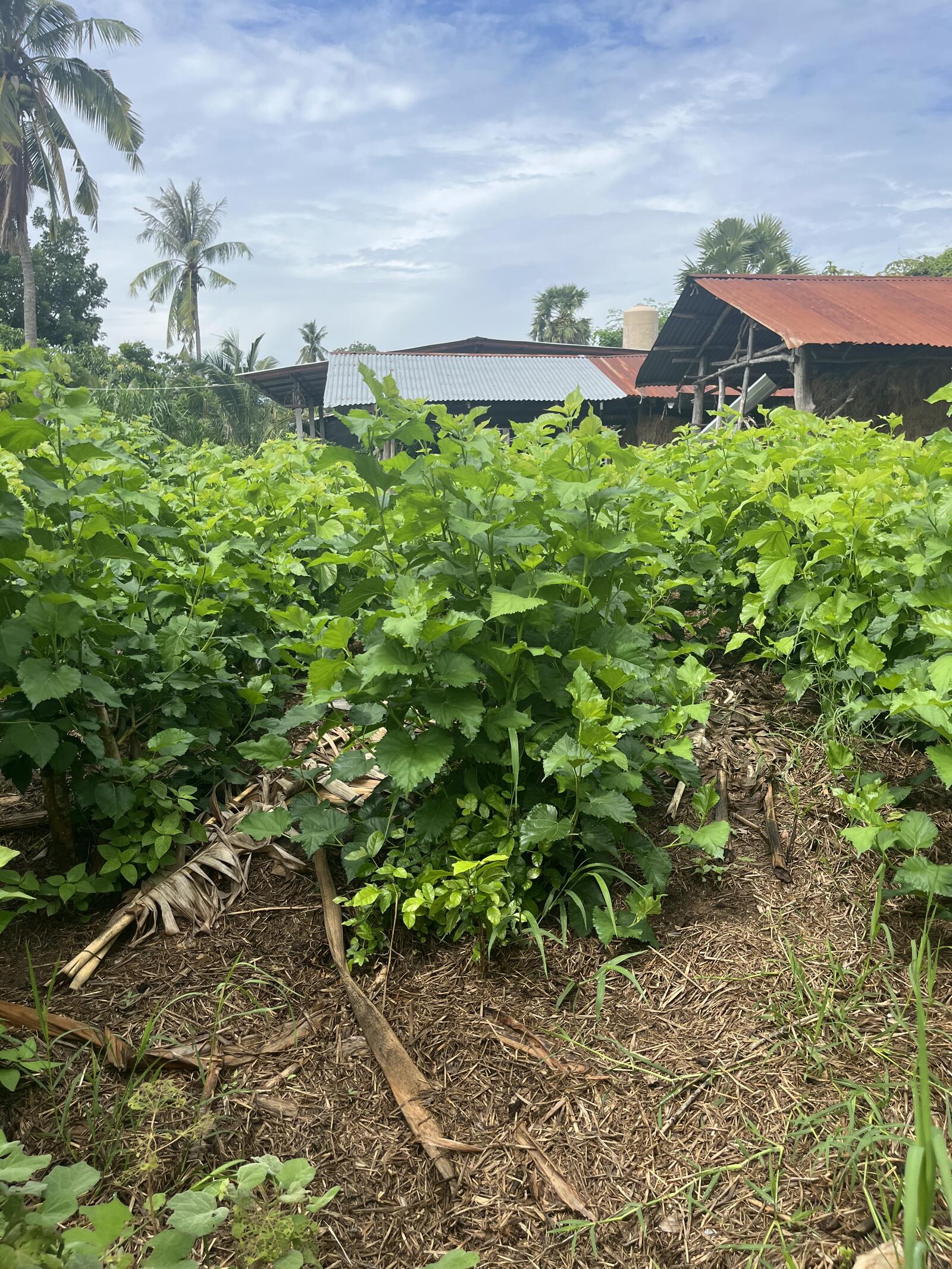
Where the cloth comes from.
The Mun river runs east across Isan, gathering villages along both banks. Surin sits on the southern side. The climate is hot and slow, with a long humid season that keeps raw mulberry silk pliable on the loom. The dry months come quickly, and the cloth must be off the warp before the air goes brittle. Mulberry grows here in the red clay. The Bombyx mori silkworm eats it and spits a thread the color of weak tea.
Everything listed here comes off two looms in one village: Ban Takian, in Lamduan district south of Surin town, a rice-farming village where the looms sit in the shade under the houses and the mulberry grows at the paddy edge. The silkworms are raised a few houses over; the thread is reeled by hand in the same lane. When a length comes down off the loom it is folded flat in cotton, and it waits for its buyer in the house it was woven in.
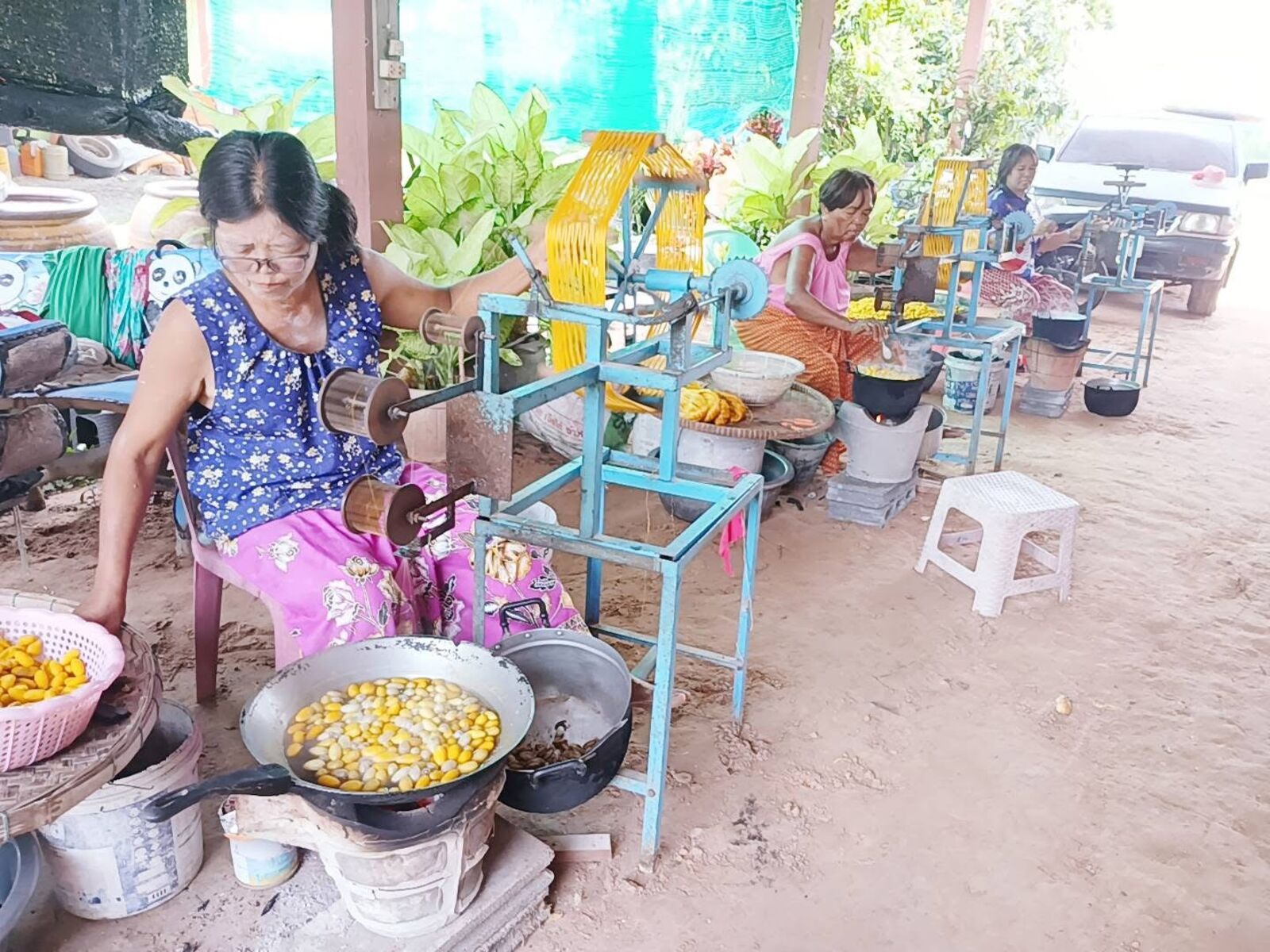
How the pattern arrives before the cloth does.
Mudmee is the Thai name for ikat. The pattern is dyed into the warp and weft before the threads ever meet the loom. The weaver ties off sections of yarn with banana fiber, lowers the bundle into the dye, lifts it, lets it dry, unties some ties and adds others, dyes again. By the time a single warp is ready to be wound on, it carries the whole design in its length, in soft-edged segments of color. When the shuttle finally goes across, the cloth grows pattern as it grows length.
The dyes have changed; the method has not. A generation ago the reds came from lac and the blacks from ebony pod, days at the pot for a single batch. Today the color is modern — chosen for depth and for holding fast through decades of washing — but it still goes where it always went: into the thread, bundle by bundle, before the loom is dressed. The figure is decided at the dye pot, not at the shuttle.
A practiced weaver — and the weaver here has had sixty years of practice — finishes fifty or sixty centimeters of cloth in a day. A full length of two meters is five or six days on the loom. The selvedge is closed by hand at both ends, with a small knot the width of a fingernail.
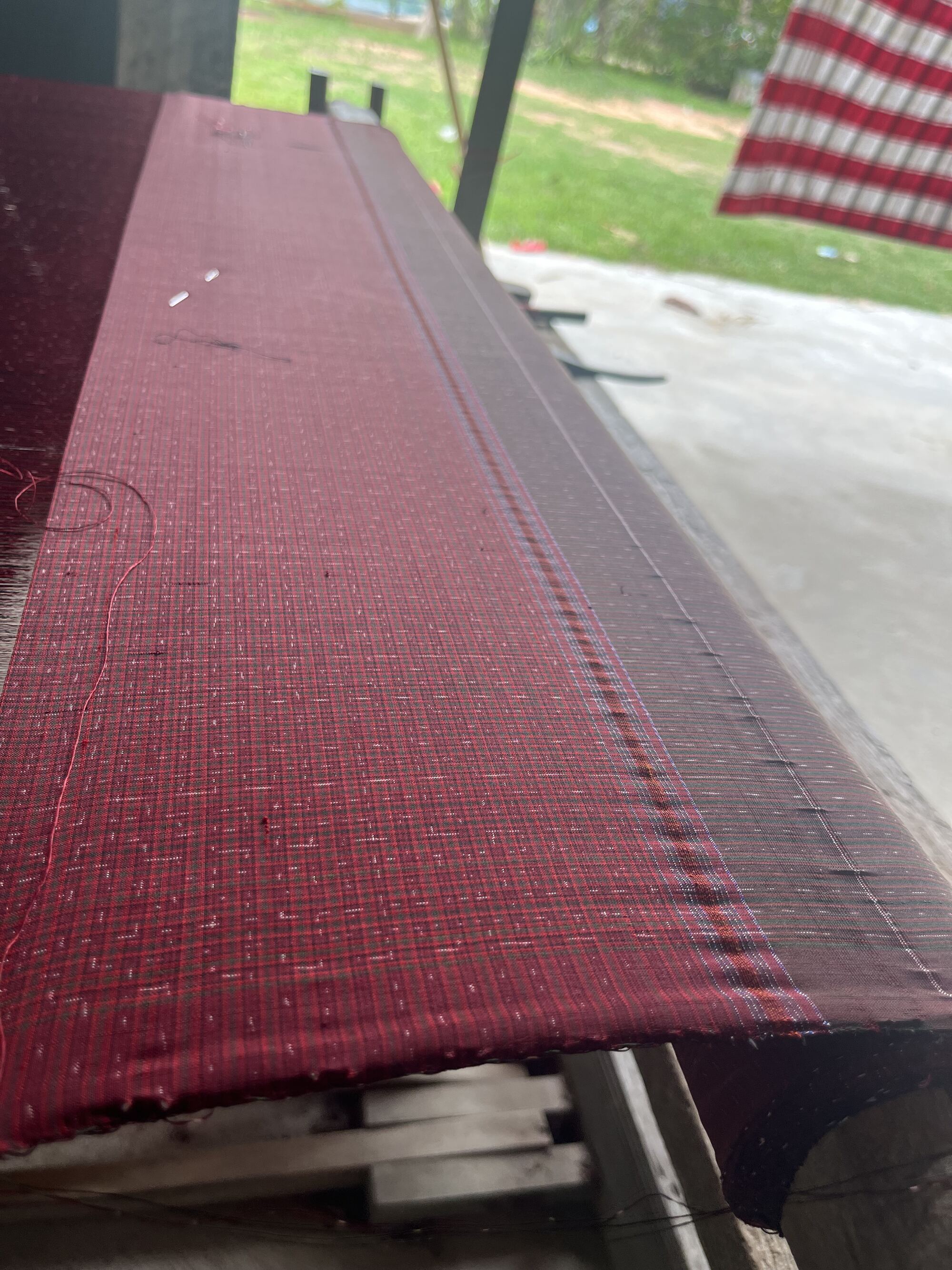
A rice farm first, and the loom between harvests.
The house at the center of this is a rice farm before it is anything else. When the harvest was in and the fields went quiet, the men of Ban Takian left to find season work in other provinces — my father among them — and the women stayed. My mother, Wilai Kingchan, stayed with the mulberry, the silkworms, and the loom. She has been weaving for sixty years. She tied every hol pattern by hand, bundle by bundle, dyed the thread in the yard, and wove from the cool hours of the morning until the heat came up. Her mother taught her. Nothing was written down. It moved from hand to hand.
I grew up under that loom. The knock of the beater was the sound of the house, and I assumed it was simply what mothers did. That loom fed us, and it put me through university — every term paid for fifty centimeters at a time. It took leaving Surin to understand what I had been watching. My mother understands it better than I do: when a neighbor asks to learn, she teaches for nothing, so that the weaving stays in the village longer than she will.
What leaves that house is what is in this collection.
The cloth grows pattern as it grows length.Mudmee · Ban Takian
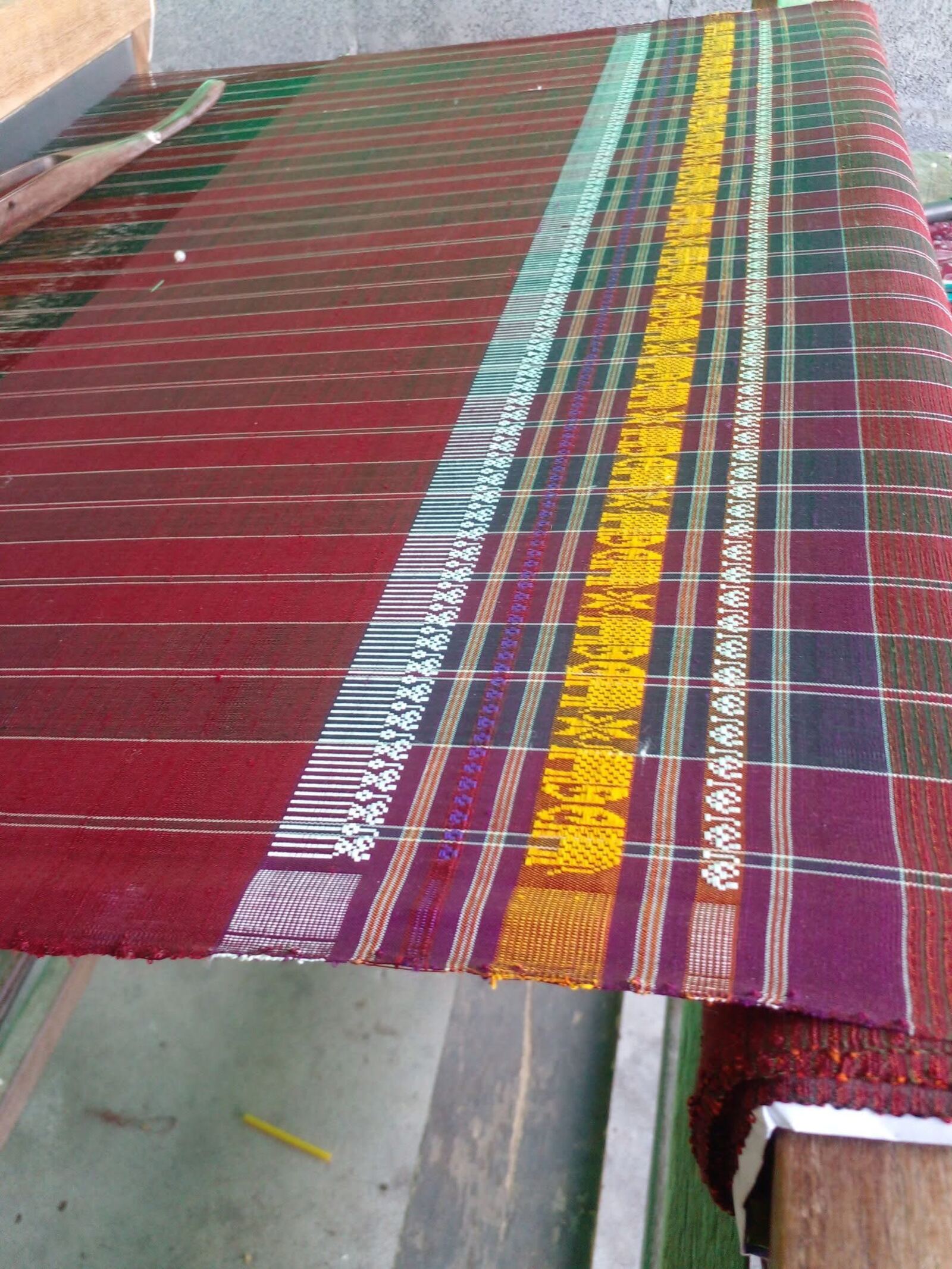
How the cloth reaches you.
Each piece leaves the same way: folded, wrapped in cotton, and packed in the front room by my mother's hands. DHL collects from Surin, and the parcel reaches most of the world in under a week. Nothing sits in a warehouse, because there isn't one — the cloth waits in the house it was woven in, and the hands that tied the pattern seal the box.
Ready pieces ship within the week. A commission takes about a month on the loom — the figure agreed by photograph before the first thread is tied, and the finished length photographed in morning light before it goes into the box. Nothing leaves unfinished.
Patience here is the same as taste.
The pace is the pace of the loom. If a length is not finished, it is not listed. The accounting is just as short: each piece sold goes back to the house that wove it, and keeps a loom strung through one more quiet season.